User Problem
There is no recorded archive of South Lebanese native food. Traditional dishes from the south are frequently misattributed to Lebanese cuisine broadly, erasing the distinct culinary identity of the region. Without a dedicated space, recipes passed down through generations risk being lost, undocumented, uncredited, and forgotten.
User Types
1. Recipe Submitter
A South Lebanese woman, aged 40 and above, who submits a recipe along with the story behind it.
2. Storyteller
Any individual who would like to share a blog post about their experience in South Lebanon and the role food plays in it.
3. Browser
Users who discover and read recipes and stories on the platform.
Context
The South of Lebanon comprises 7 distinctive districts, each carrying a long and layered history. Over centuries, many empires settled in the region, leaving behind a cuisine that is as diverse as it is rich. Despite its small geographic footprint, the south offers an abundance of remarkable dishes that deserve to be known.
South Lebanese cuisine is defined by its closeness to the land. Recipes are built around ingredients that grow locally, and the food itself has been shaped over time by the climate, regional conflicts, and trade routes passing through the area.
While the starting point was a digital recipe-sharing platform, Al'Blatta was built to be something more. It is a community — one that connects South Lebanese individuals first, and the wider world second.
Food has always brought people together. We cook together and tell stories. We eat together and tell more. These tables, dishes, and tastes carry not only the memories of the people around them, but the memory of an entire region.
Design
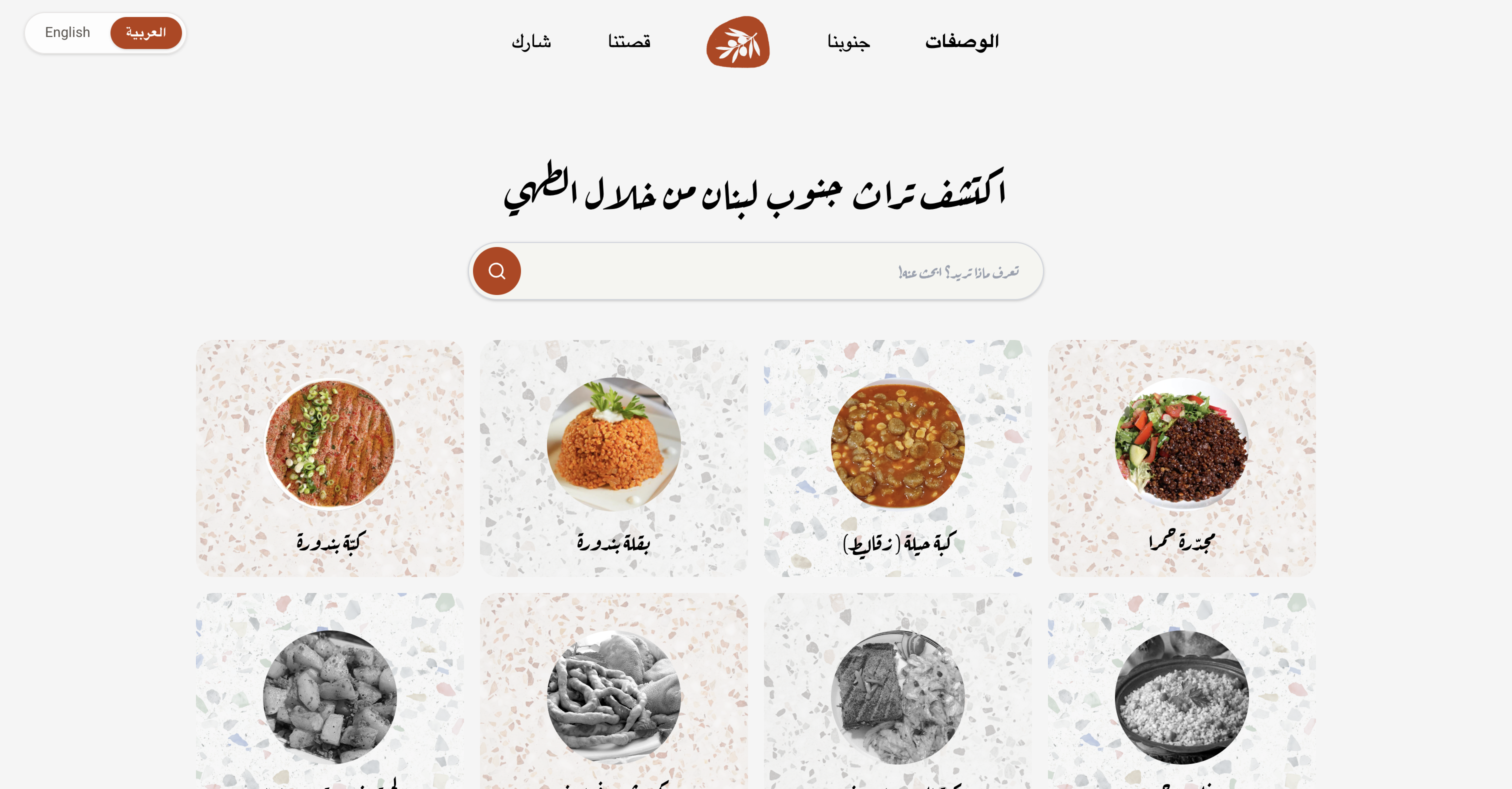
1. Recipes and Homepage
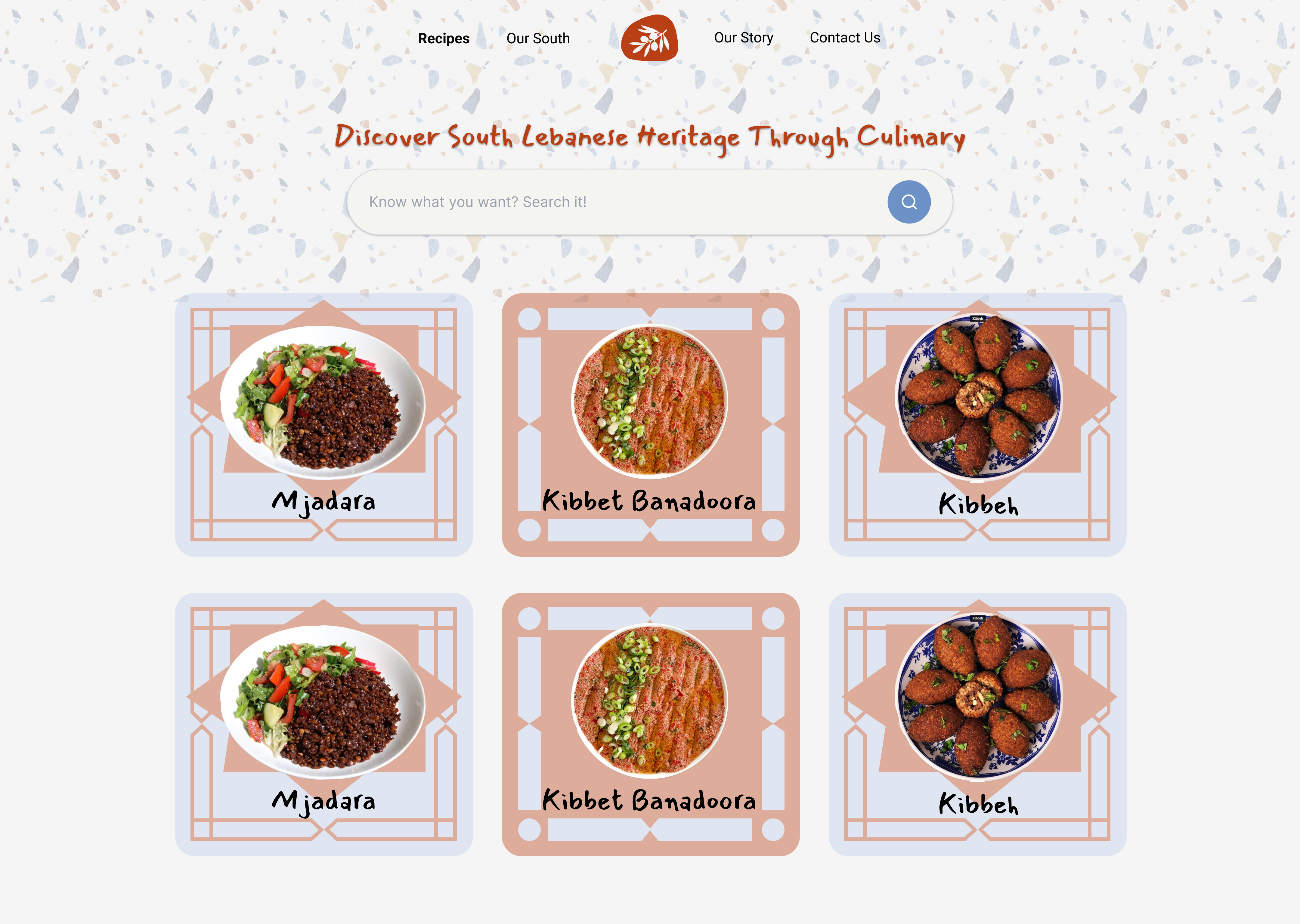
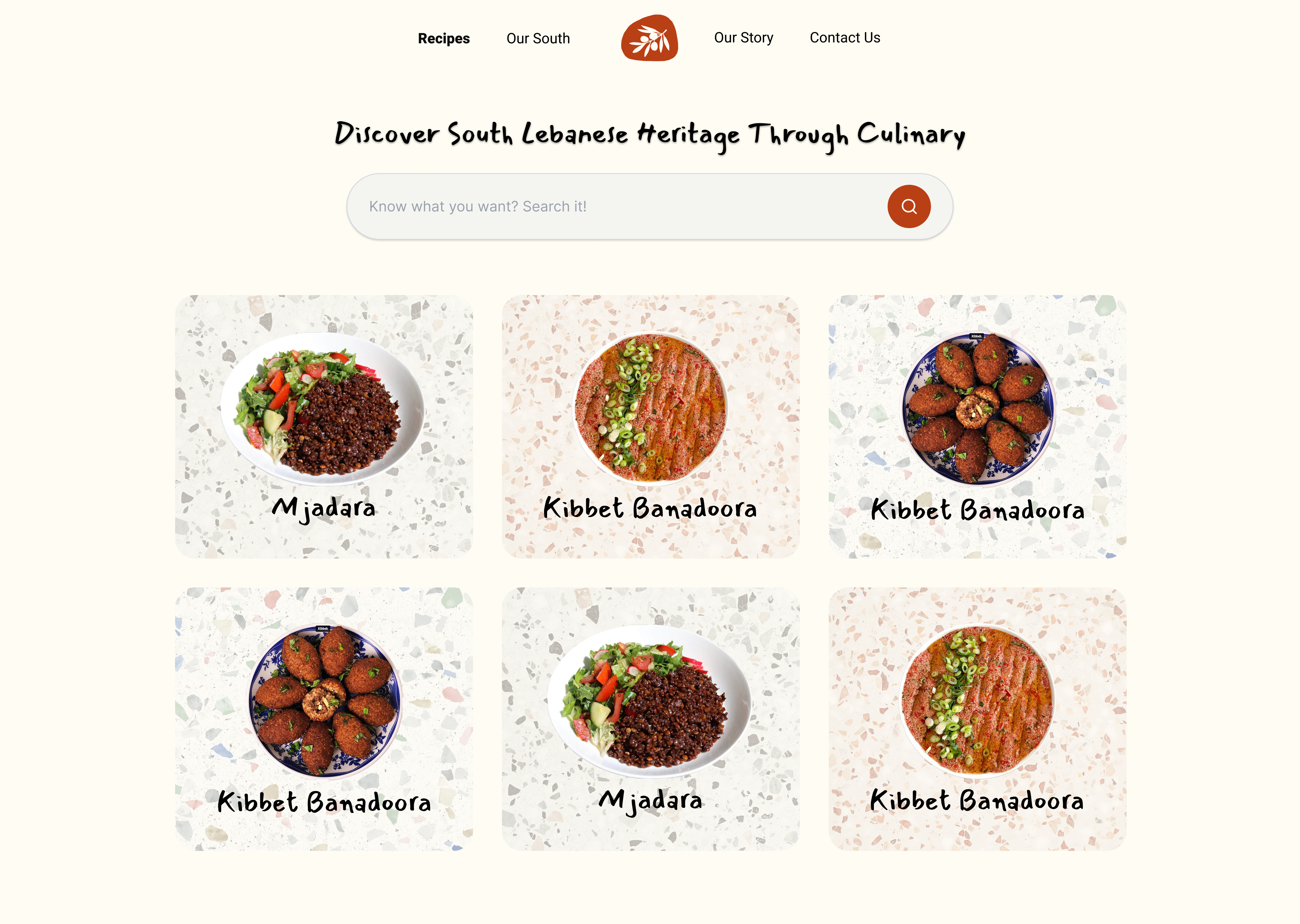
The homepage currently displays recipes with the ability to search. Each recipe is submitted by a South Lebanese woman.
The first design iteration focuses on full recipe visibility, as recipes are the core component of the product. As the website evolves and its user base grows, future iterations will introduce greater visibility for stories, saving features, and recent blog posts.
Recipe Page
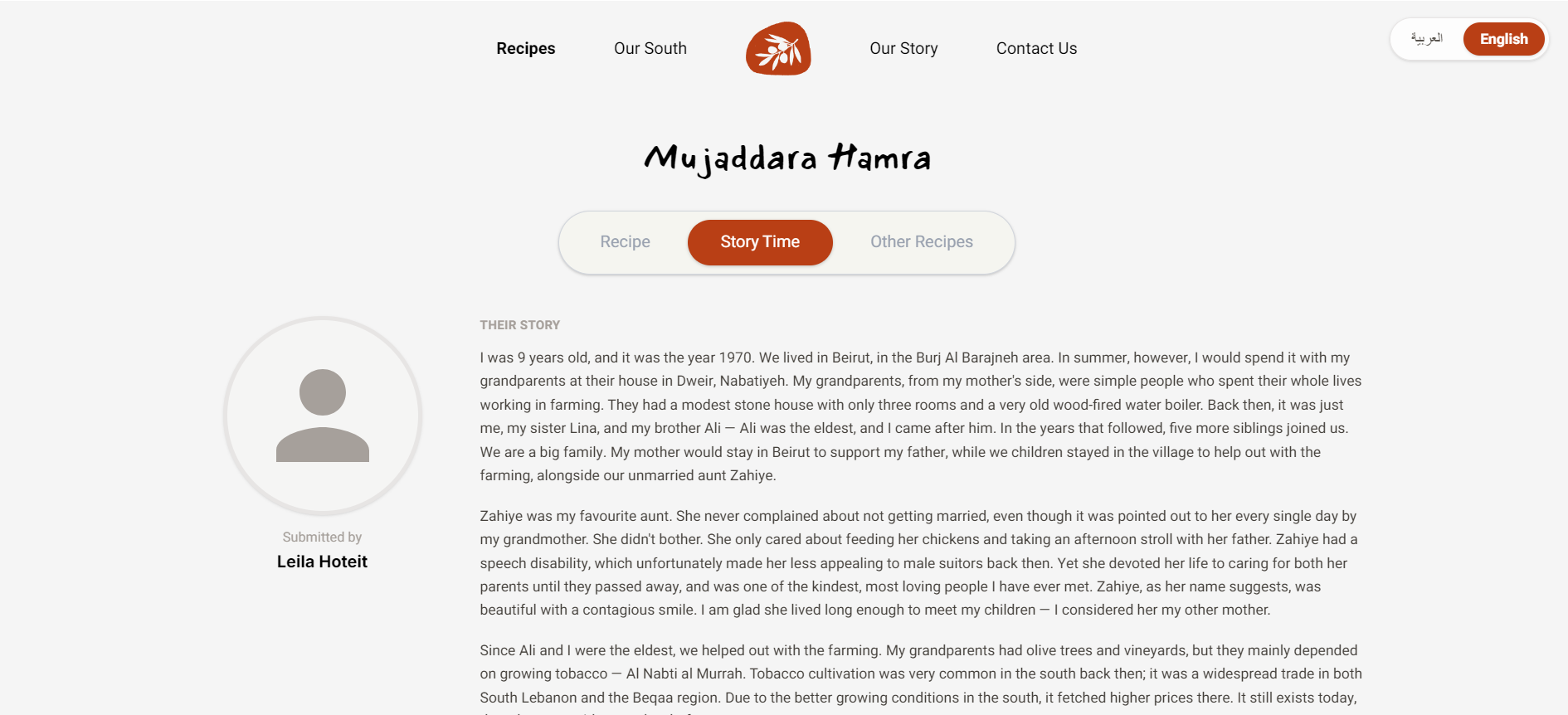
The recipe page includes three parts: the recipe instructions, Story Time, and other recipes.
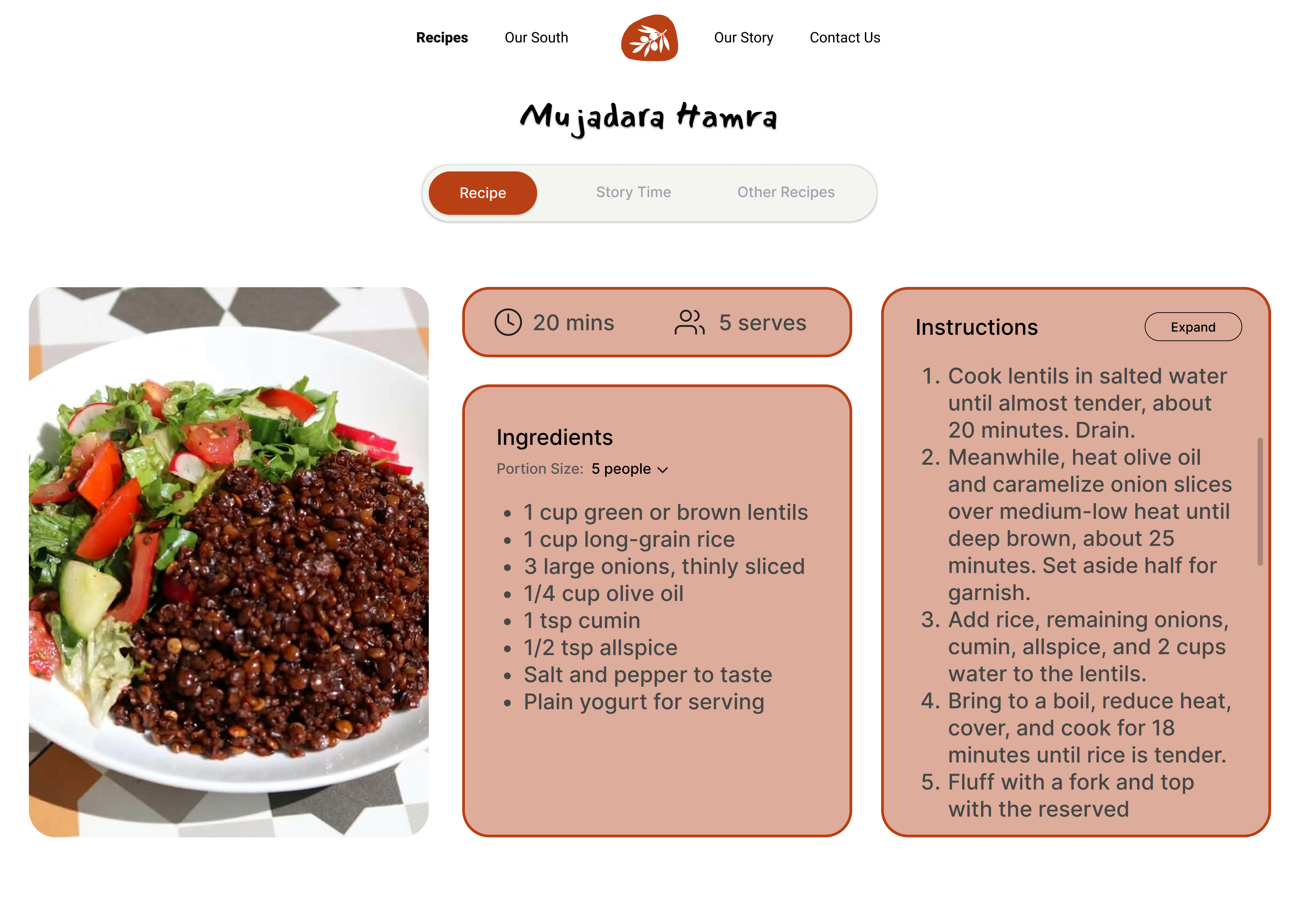
Story Time sheds more light on the recipe submitter, giving women aged 40 and above a space to express themselves and share their experiences, a space they have never had before.
2. Our Story
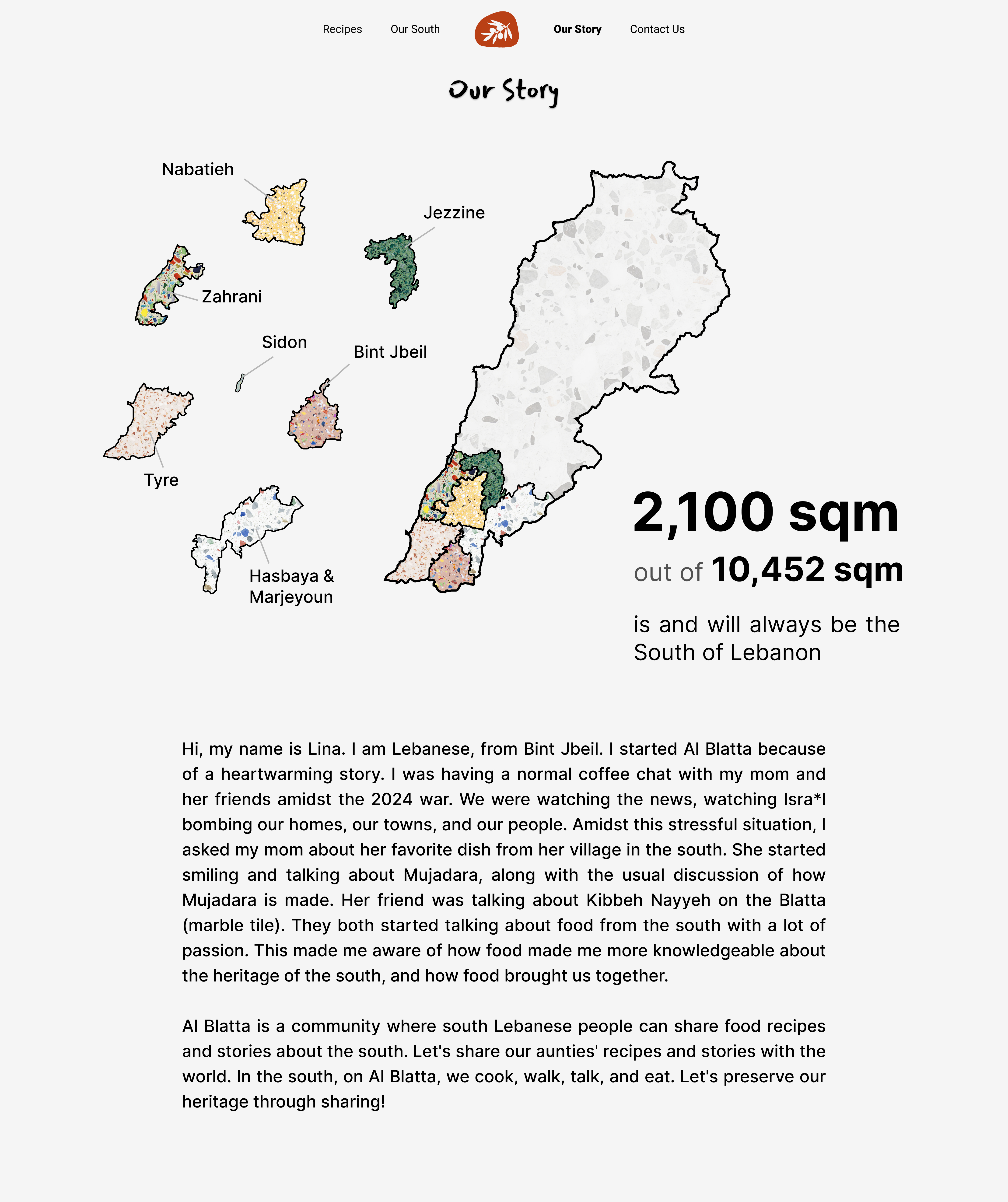
The Our Story section introduces the purpose of the product and why it matters.
3. Our South
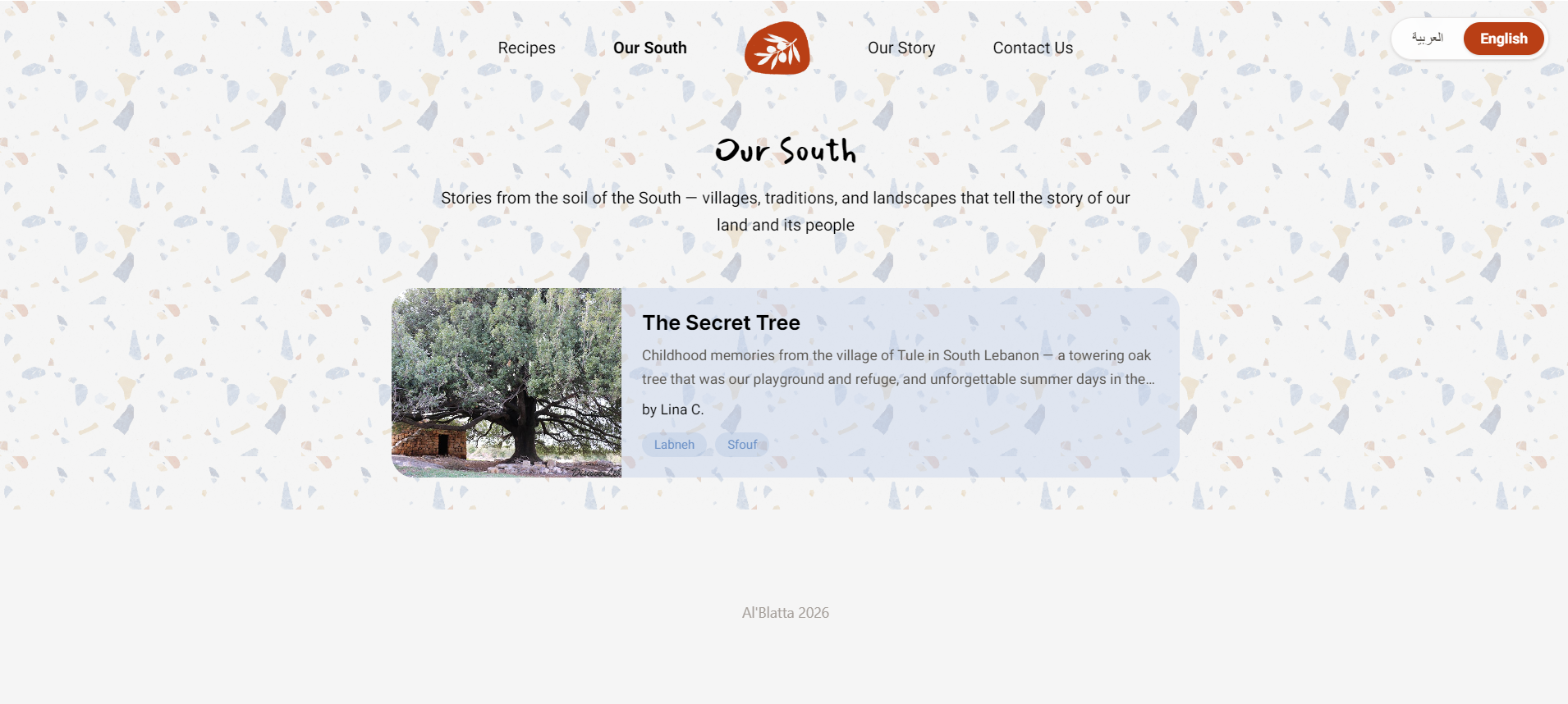
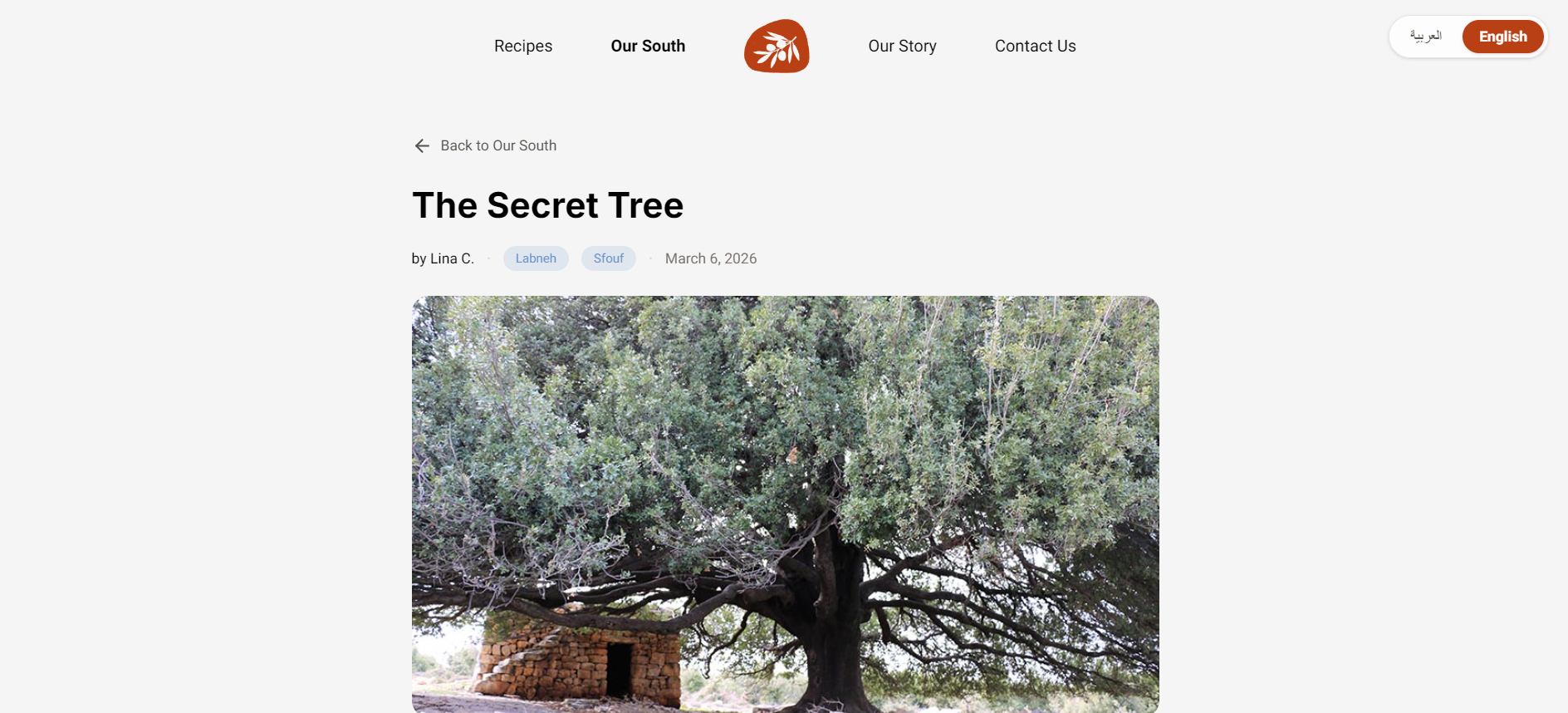
As food brings people together, this page is dedicated to sharing blog posts about the south. Currently, blogs are submitted via email, but as the product grows, a dedicated space for submitting both blogs and recipes directly within the platform will be introduced.
User Testing
This product is new and still under user testing, with the goal of iterating on current features and their usability. I assembled a small group of users who will use the product for two weeks. The users are from the following groups:
1. Recipe Submitters
The goal is to connect with more women and encourage them to submit their recipes to the platform.
2. Recipe Viewers
Users who will use the recipe page and try the recipes, helping identify how to make the experience more digestible and readable.
3. Blog Writers
Individuals who will submit stories to be featured in the Our South section.
Impact
- 01
Al'Blatta creates the first dedicated digital archive of South Lebanese cuisine, preserving recipes that have been passed down through generations and were at risk of being lost.
- 02
It gives South Lebanese women aged 40 and above a platform to share their recipes and stories, offering a space for self-expression that many of them have never had access to before.
- 03
By building a community around food, Al'Blatta connects South Lebanese individuals to their heritage and opens that connection to the wider world, giving the region's distinct culinary identity the recognition it deserves.