User Problem
Active language learners often struggle with keeping track of vocabulary they learn during their day-to-day life. Language apps often neglect a crucial part of learning languages, which is memory - memorising and revising the vocabulary words learners are picking up.
Context
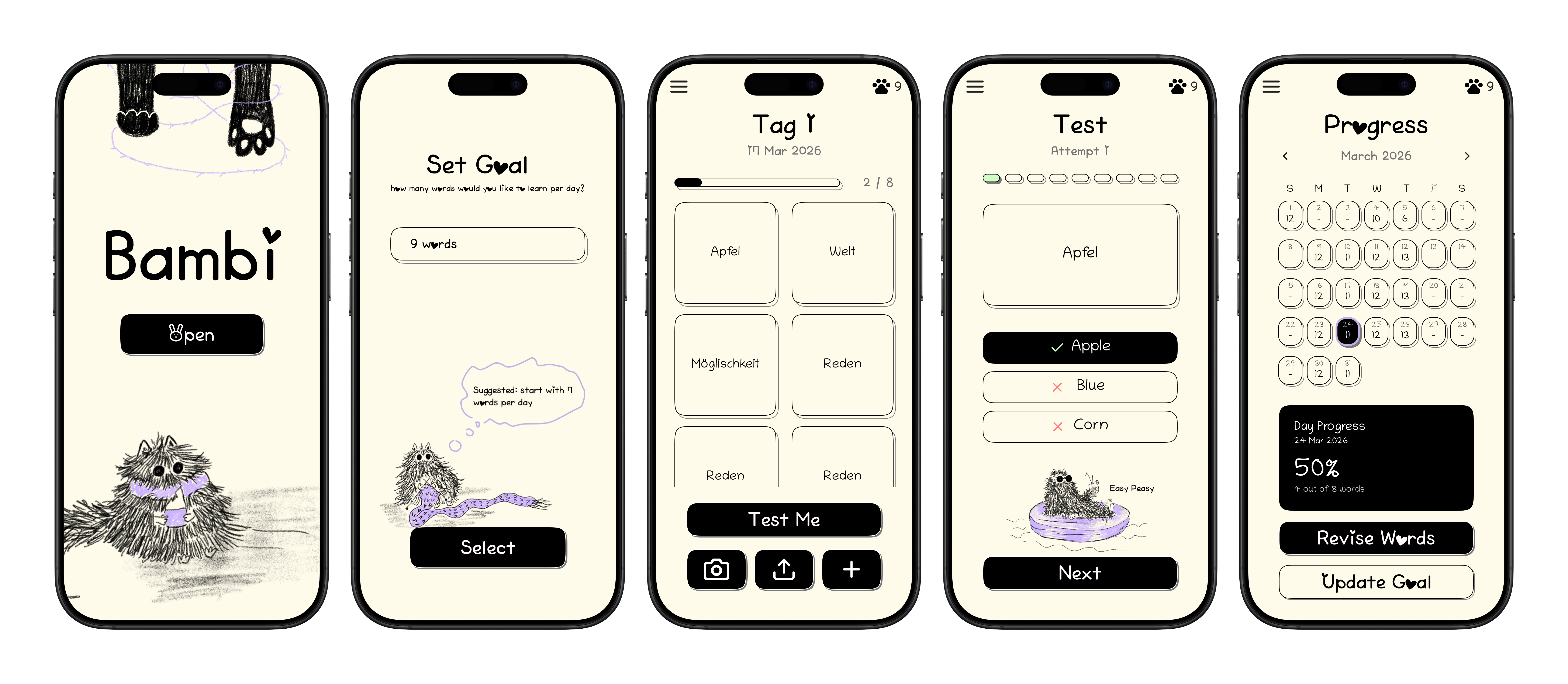
Bambi is a mobile web application that leverages AI to help active language learners keep track of words and sentences they're learning daily in the language they're studying. The app mimics flashcard functionality while making it more interactive and easy to use.
The goal is to support language learners by offering a fun, easy-to-use product that revolves around not killing Bambi the cat - who has only 9 lives - by not making any mistakes.
Application Architecture
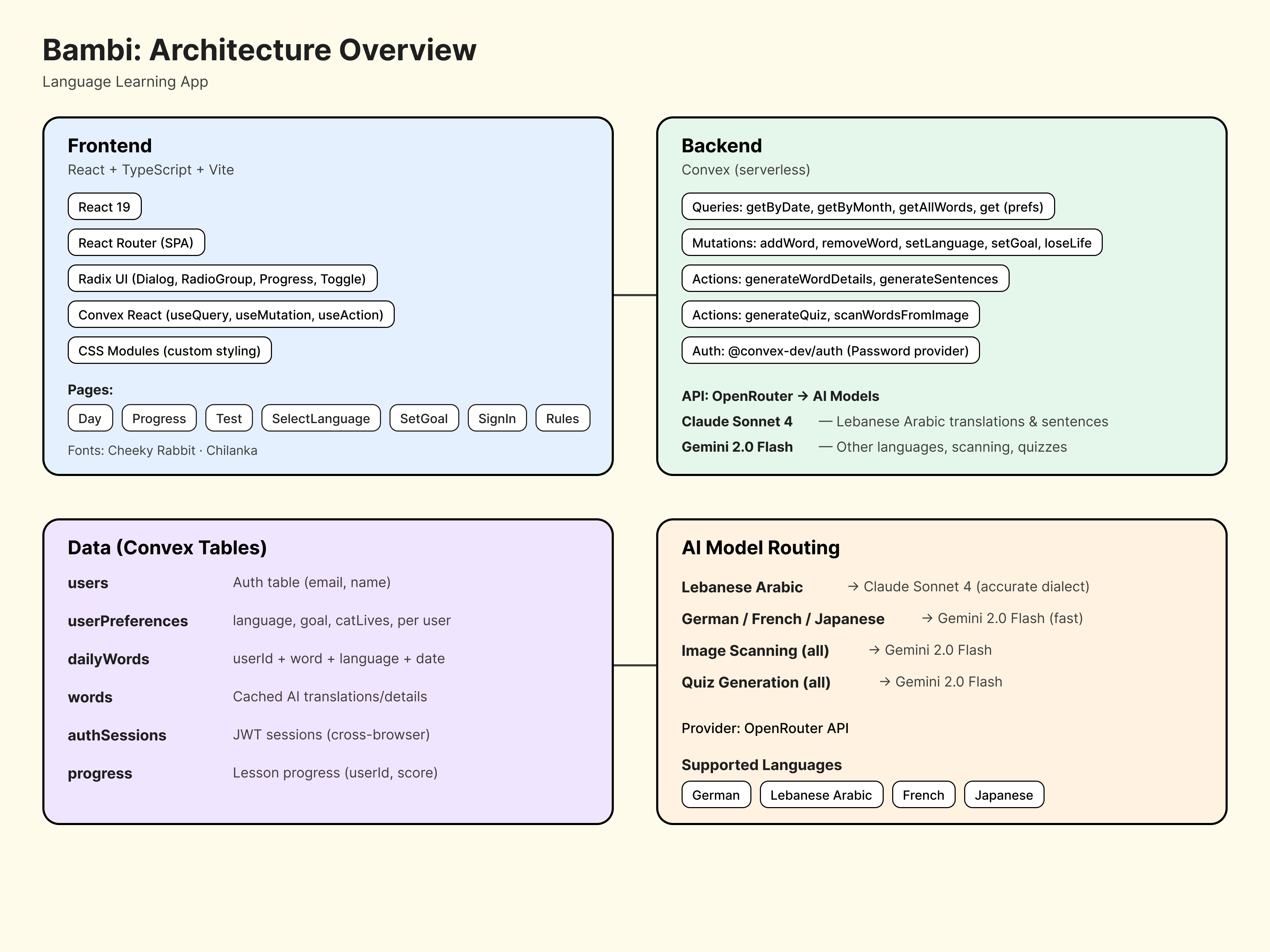
Bambi uses a React 19 and TypeScript frontend with a serverless Convex backend. AI routing is handled through OpenRouter - Claude Sonnet 4 for Lebanese Arabic dialect accuracy, and Gemini 2.0 Flash for German, French, Japanese, image scanning, and quizzes.
Impact
- 01
Bambi fills a gap in language apps by focusing on vocabulary retention through interactive flashcard-style exercises, helping learners memorise and revise words they encounter daily.
- 02
The gamified experience of keeping Bambi the cat alive across 9 lives turns repetitive practice into a fun, motivating challenge that encourages consistent use.
- 03
By routing AI translations through dialect-accurate models like Claude Sonnet 4 for Lebanese Arabic, Bambi supports underserved languages that mainstream apps often overlook.